Initiatives
"History and Legacy of Eugenics"
Funded by the Provost’s Innovation Grant, HFEI’s first 18-month initiative focuses on the “History and Legacy of Eugenics” and is grounded and organized around three pillars, a public lecture and roundtable talk, a pedagogical community of practice, and the development of an interdisciplinary course.
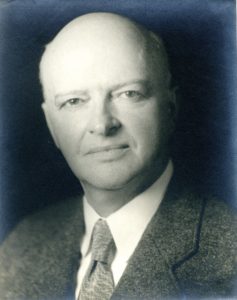
Based on early 20th century ideas of biological determinism, the eugenics movement claimed society could be improved through selective human breeding. It harmed many people through unethical research and medical practices and influenced the atrocities of the Nazi regime. Harry H. Laughlin was director of the Eugenics Record Office at the epicenter for eugenics research in Cold Spring Harber, New York, from its inception in 1910 to its closure in 1939. Internationally renowned, Laughlin was considered a significant spokesman for the programmatic side of eugenics, lobbying legislation, public education, and dissemination of ideas widely. Due to Laughlin’s alumni status and connection to Truman State, his personal library and significant manuscript collection were donated to Truman in the 1940s.
Truman holds a distinct and invaluable resource that provides profound lessons into the past. The Cold Spring Harbor Laboratory Archives highlights Truman State University as one of a handful of institutions in the country to hold physical collections related to the American eugenics’ movement. As a liberal arts university with such a rare repository, Truman is uniquely positioned to be a leading voice on how societies can learn from history and respond to present-day ethical challenges. This initiative offers a central hub for bringing together experts in the biological and social sciences to do just this.
Public Lecture
“The Afterlives of Eugenics: Science, Democracy, and the Ethics of Expertise” by Dr. Daniel HoSang
Date: Thursday, March 4, 2027 | Location: TBA
This lecture presents Professor Daniel HoSang of Yale University, a leading interdisciplinary scholar of race, political culture, and the history of scientific authority. Professor HoSang’s work, specifically his collaborative investigation into the history of eugenics research at Yale, offers a powerful model for examining the afterlives of the eugenics movement. Rather than treating eugenics as a closed chapter of the past, the lecture examines its enduring afterlives and the broader questions it raises about the relationship between science and democracy. In addition to the public lecture, Professor HoSang’s visit will include a smaller roundtable conversation with faculty and students. This session will allow participants to explore how archival materials can be mobilized to develop ethical research practices and design interdisciplinary curriculum.
Interdisciplinary Course
SOAN 462/IDSM 352 “Eugenics, Society, and Re-Imagining Human Futures”
Instructor: Kandice Grossman | Spring 2027
This 3-credit course examines the history of eugenics and its relationship with modern and future social and ethical concerns, analyzing how ideas about human difference and social control became embedded in institutions, policies, and scientific authority. The curriculum includes a series of active learning and project-based activities, including content analysis of archival documents in the special collections and the option for a travel immersion study. This course offers the unique opportunity to earn an additional 1-credit through participation in a 3-day “Travel Immersion” study in which students will visit the eugenics archives and the “Eugenics and its Afterlives” student-led lab at Yale University in New Haven, Connecticut. This experience will broaden students’ understanding and provide insights into how other institutions are incorporating and responding to the history of eugenics. While partially supported by innovation grant funds, there are also additional costs students are responsible for paying.
Pedagogy Salon
“Teaching Eugenics Across the Curriculum”
Fall 2027 | Location: TBA
This salon brings together instructors from across the university who incorporate, or wish to incorporate, the study of eugenics into their courses. Drawing on the unique resources of Truman’s Harry H. Laughlin Papers, invited faculty presenters will share the innovative ways they use archival materials to engage students in questions of scientific authority and ethical responsibility. These presentations will showcase interdisciplinary approaches across the humanities, social sciences, natural sciences, and professional programs, modeling how historical and ethical inquiry can be integrated into a wide range of curricula. Following the presentations, the salon will transition into a facilitated collaborative exchange where faculty can discuss challenges, explore new pedagogical strategies, and co-develop interdisciplinary modules or assignments.
Further, as part of pedagogical development, funding will be provided for participating and interested faculty to attend a conference that focuses on engagement with archival research. Details coming soon.